
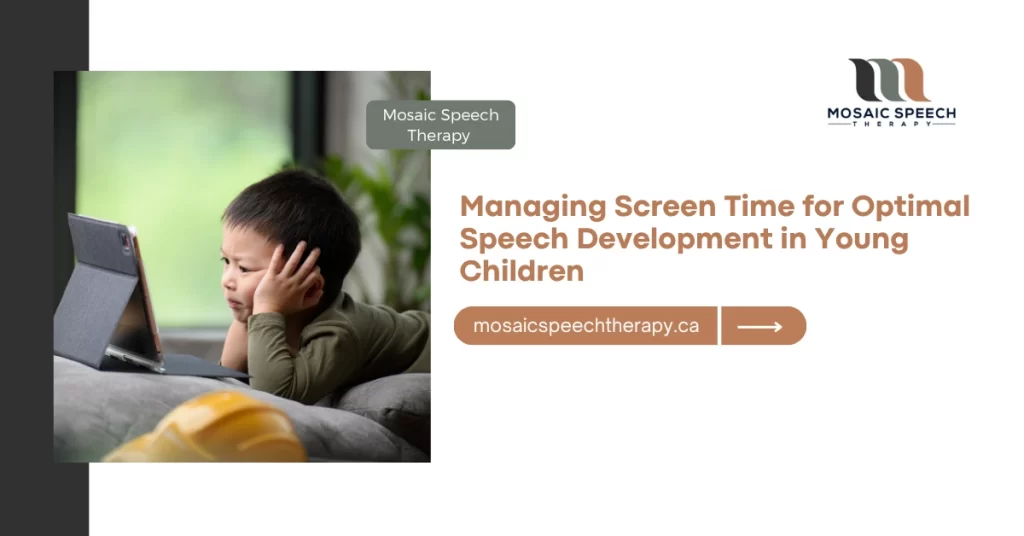
While digital devices offer educational value and entertainment, excessive or unsupervised screen time can hinder speech and language development during a child’s most critical learning years. We understand the important relationship between screen time and speech development in young children. Our team of speech-language pathologists has observed firsthand how digital consumption habits can influence a child’s communication skills during crucial developmental years.
The Impact of Screen Time on Early Language Development

Young children learn language primarily through social interactions and responsive communication with caregivers. When excessive screen time replaces these valuable face-to-face exchanges, several key developmental processes can be affected.
Research indicates that children under age 2 who spend more time with screens tend to have fewer vocabulary words compared to peers with limited screen exposure.
The passive nature of many digital experiences simply cannot replicate the rich back-and-forth dialogue that occurs naturally during play, reading, and daily activities. The constant stimulation and rapid scene changes in many programs can make the natural pace of human interaction seem less engaging by comparison.
Recommended Screen Time Guidelines by Age
To promote optimal speech and language development, Mosaic Speech Therapy aligns with the guidelines recommended by pediatric and speech-language associations:
- Infants (0–18 months): No screen time, except for video chatting with close family under supervision.
- Toddlers (18–24 months): If introduced, screen time should be limited to high-quality programming with an adult present to help them understand what they’re viewing.
- Preschoolers (2–5 years): Limit screen time to one hour per day of educational content, co-viewed with caregivers to encourage discussion and understanding.
- Children 6 years and older: Set consistent limits to ensure screen use does not interfere with adequate sleep, physical activity, or real-world social interactions.
How Screen Time Affects Speech Milestones
Excessive screen exposure can lead to:
- Reduced Verbal Interaction: Screen time can replace critical verbal exchanges between children and caregivers, which are essential for speech modeling and conversational turn-taking.
- Limited Attention Span: Fast-paced digital content can overstimulate the brain, affecting attention control and listening skills.
- Decreased Social Cue Recognition: Screens lack the nuances of human expression, tone, and body language, reducing a child’s ability to interpret non-verbal cues.
- Speech Delays: Children may repeat phrases heard from screens (echolalia) without understanding their meaning, which can impact the development of functional language use.
Strategies for Healthy Screen Time Habits

At Mosaic Speech Therapy, we advocate for intentional and purposeful screen use. Here are some expert tips to help parents strike the right balance:
1. Prioritize Face-to-Face Interaction
The most powerful tool for speech development is human interaction. Talk, sing, and read to your child daily. Narrate activities, ask open-ended questions, and encourage your child to express themselves with words.
2. Engage in Co-Viewing
Watch content with your child and discuss what you see together. Pause often to ask questions, label objects, explain new words, and encourage your child to talk about what’s happening. This transforms passive screen time into an active learning opportunity.
3. Set a Consistent Routine
Create a predictable daily schedule that includes designated screen time slots. Use timers to manage viewing sessions and avoid allowing screens during meals or within an hour of bedtime.
4. Create “Screen-Free” Zones
Establish areas in the home, such as bedrooms and dining areas, where screens are not permitted. These zones promote conversation, bonding, and more mindful interactions.
When to Seek Professional Guidance
If you’re concerned about your child’s speech development in relation to their screen habits, our Edmonton speech therapy team is here to help. Consider reaching out to Mosaic Speech Therapy if your child:
- Shows reduced interest in conversation after screen time
- Struggles to maintain attention during face-to-face interactions
- Has limited vocabulary for their age
- Uses many phrases from media but fewer spontaneous, original sentences
Finding the Right Balance for Your Family
At Mosaic Speech Therapy in Edmonton, we offer thorough assessments, individualized therapy plans, and family education to support each child’s unique communication needs. Early intervention can make a significant difference in long-term speech and language outcomes.
We’re committed to supporting Edmonton families in navigating these decisions. By making informed choices today, you’re investing in your child’s communication skills for tomorrow. For personalized assistance, feel free to contact us at info@mosaic-slp.ca or 587-292-0072.