Distinguishing between cultural language variations and clinical speech delays requires specialized expertise and cultural sensitivity. Multilingual children in Edmonton’s diverse community often present unique communication patterns that demand careful assessment.
We take the time to understand each child’s cultural background and language exposure to determine whether observed variations stem from multilingual development or indicate an underlying speech-language disorder.
Understanding the Difference: Cultural/Linguistic Variation vs. Clinical Delay

A cultural or linguistic variation refers to the normal differences in language development that occur in children exposed to more than one language or dialect.
These differences are not disorders. For example, a bilingual child might mix words from both languages in a single sentence (code-mixing), which is a typical part of bilingual development. Their total vocabulary, when words from both languages are combined, is typically on par with monolingual peers.
A clinical speech or language delay/disorder, on the other hand, is a difficulty that is present in all languages the child speaks. It is a neurological or physiological impairment that affects the ability to understand and/or use language effectively. This is not influenced by cultural background but is a fundamental challenge with the building blocks of communication.
Key Indicators of a Potential Clinical Delay
While every child develops at their own pace, certain red flags transcend cultural and linguistic boundaries. These are patterns we look for that suggest an underlying clinical issue.
1. A Lack of Gesturing and Non-Verbal Communication
By 12 months, most children, regardless of their language exposure, use gestures to communicate. This includes waving “bye-bye,” pointing to objects they want or find interesting, and shaking their head for “no.” A significant lack of these non-verbal communication skills can be an early indicator of a broader communication challenge.
2. Limited Sound and Word Production
There are general expectations for sound and word development. While a bilingual child might have words in one language and not the other, the total number of words and sounds should be progressing.
- By 18 months: A child should have a vocabulary of at least several meaningful words (across all languages).
- By 24 months: A child should be combining two words into simple phrases (“mama up,” “more milk,” “car go”).
If a child’s expressive language is significantly behind these milestones in all languages they are exposed to, it may point to a clinical delay.
3. Difficulty with Social Interaction and Play Skills
Language is deeply intertwined with social connection. A clinical delay often involves challenges with the social use of language (pragmatics). This may look like:
- Little interest in interacting with peers or adults.
- Difficulty taking turns in play or conversation.
- Inability to follow simple, routine directions (e.g., “get your shoes,” “come here”).
- Preferring solitary play exclusively, without attempts to communicate during play.
4. Struggles with Understanding Language (Receptive Language)
This is a critical area. A clinical language disorder often involves problems with understanding what is said. If a child consistently has difficulty following simple commands, answering basic “what” and “where” questions, or identifying common objects and pictures—and this difficulty is present in their primary home language—it strongly suggests a clinical issue rather than a bilingual delay.
The Bilingual Advantage: Dispelling Common Myths
It is a common misconception that bilingualism causes confusion or speech delays. Research consistently shows this is not true. Learning two or more languages is a normal and achievable feat for the human brain.
Bilingual children may sometimes take slightly longer to develop both languages to the same level as a monolingual child, but their total conceptual vocabulary and language comprehension are typically strong. The “bilingual advantage” often includes enhanced cognitive flexibility and problem-solving skills.
When to Seek a Professional Speech-Language Assessment in Edmonton
If you observe any of the red flags mentioned above, the most important step is to seek a comprehensive assessment from a registered Speech-Language Pathologist (SLP). At Mosaic Speech Therapy, our Edmonton-based SLPs are trained to differentiate between language differences and language disorders.
You should consider an assessment if your child:
- Is not using gestures by 12 months.
- Prefers gestures over vocalizations to communicate by 18 months.
- Has difficulty imitating sounds or words by 18 months.
- Has an unusually raspy or nasal-sounding voice.
- Is not understood by familiar listeners at least 50% of the time by 3 years old.
- Shows frustration about not being understood.
- Has a history of frequent ear infections, which can impact hearing and, consequently, speech development.
Our Approach at Mosaic Speech Therapy
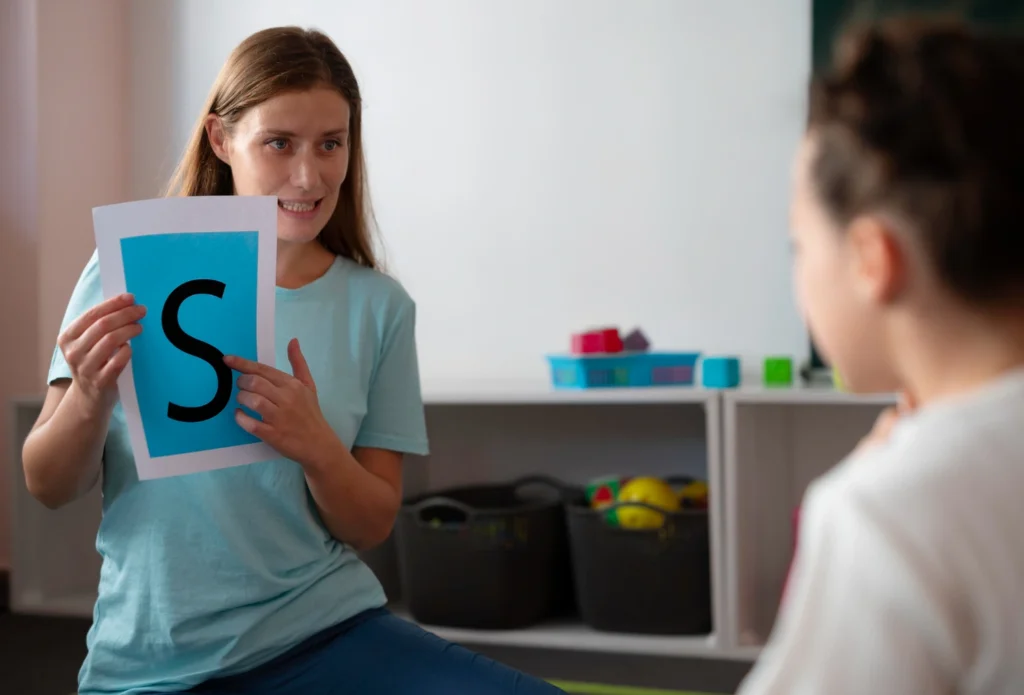
When you consult with our team in Edmonton, we conduct a culturally and linguistically sensitive assessment. We gather a detailed language history, including what languages are spoken at home, by whom, and in what contexts. Our assessment tools, whenever possible, are adapted to account for bilingual development.
We focus on identifying whether a true disorder exists in the child’s strongest language. Our goal is never to change a child’s bilingualism but to support their ability to communicate effectively in all their languages.
If therapy is recommended, we develop a personalized plan that respects your family’s cultural and linguistic background, often collaborating with parents and caregivers to implement strategies within the home environment.
Trust Your Instincts
You are the expert on your child. If you have a persistent concern about your child’s speech and language development, do not hesitate to seek professional guidance.
Distinguishing between a cultural difference and a clinical delay is a complex task best left to qualified professionals. Early intervention is the most powerful tool for supporting children with communication delays, leading to better long-term outcomes for academic success and social-emotional well-being.
For personalized assistance, feel free to contact us at info@mosaic-slp.ca or 587-292-0072.