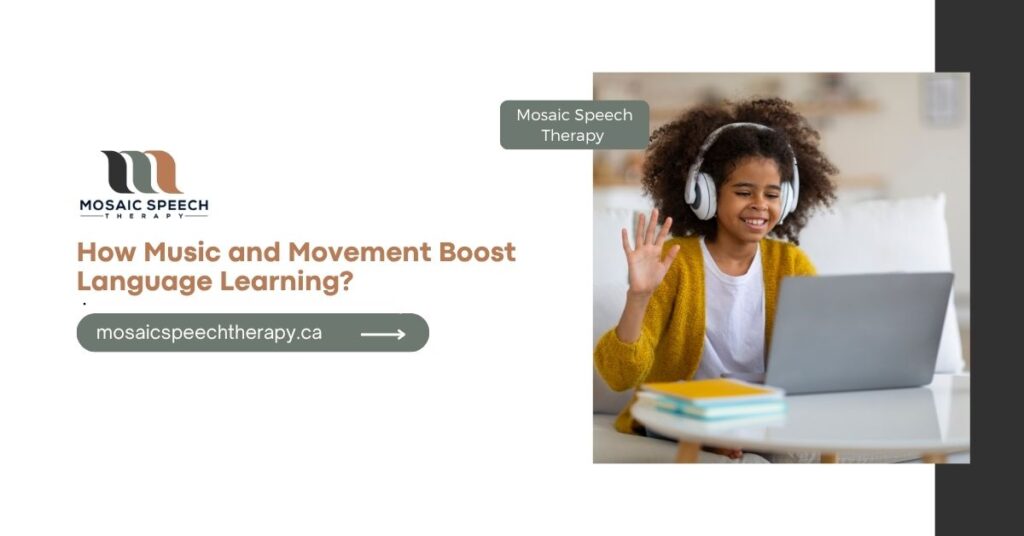
Have you ever noticed how your child starts to sway, clap, or dance the moment their favorite song plays? Music and movement naturally engage children — and that’s exactly why we use them at Mosaic Speech Therapy in Edmonton to support early language development.
While many believe that music or oral motor exercises (like tongue or lip movements) help children produce specific speech sounds, research tells a different story.
Music and movement are powerful tools for building language, not articulation. They create an engaging, brain-rich environment where words, rhythm, and emotion come together to make communication fun and meaningful.
The Real Connection: Music, Movement, and Language Growth

Music and movement tap into multiple areas of the brain at once — auditory, motor, and emotional centers — helping children process and remember new information more effectively.
Here’s how they truly support language development (not speech sound production):
- Vocabulary Building: Songs repeat words and phrases, helping children learn new words in context.
- Sentence Structure: Music naturally follows patterns, which helps children understand sentence rhythm and grammar.
- Listening Skills: Moving or dancing to songs teaches children to follow directions and attend to sounds.
- Turn-Taking and Social Communication: Group songs and movement games encourage interaction, eye contact, and shared joy — all vital parts of communication.
At Mosaic Speech Therapy, we integrate these experiences into therapy to create a natural bridge between movement, music, and meaningful language use.
A Common Myth: Fine Motor Skills Don’t Create Speech Sounds
It’s a common misconception that practicing fine motor activities (like blowing, chewing, or tongue exercises) can help a child articulate sounds better. In reality, the muscles we use for speech are highly specialized and don’t improve through unrelated fine or gross motor tasks.
Instead, our focus is on building a child’s ability to understand and use language — which lays the foundation for clearer, more confident communication as their speech system naturally develops.
How We Use Music and Movement in Therapy
At our Edmonton speech therapy clinic, we weave music and movement into sessions to make language learning interactive and memorable. Here are a few ways we do it:
Action Songs: Favorites like “If You’re Happy and You Know It” or “Head, Shoulders, Knees, and Toes” pair words with actions, reinforcing meaning and comprehension.
Rhythmic Games: Clapping or marching to a beat while saying simple words helps children link rhythm to language pacing.
Musical Storytelling: Singing or moving along with a story encourages children to use words expressively and imaginatively.
Sensory Play: Movement paired with sound (like shaking maracas or dancing with scarves) engages multiple senses, supporting attention and retention.
Each session is designed to meet your child’s unique communication goals, with music and movement used intentionally — never just for fun, but as a meaningful way to build language.
How Parents Can Support Language Through Music and Movement
Families in Edmonton can easily bring these strategies home:
- Sing During Routines: Turn getting dressed or cleaning up into a simple song.
- Use Movement to Teach Words: When you say “up,” lift your child; when you say “down,” squat together.
- Play Music Together: Try drumming or clapping to favorite tunes to build rhythm and listening skills.
- Explore Local Music Opportunities: Visit community programs or music events that welcome families — these joyful settings nurture language naturally.
The Rhythmic Power of Music in Speech Therapy
Music is a universal language that naturally captures a child’s attention and motivates participation. Our speech-language pathologists in Edmonton skillfully use music to target specific speech and language goals.
Rhythm and Fluency
The rhythmic structure of music provides a predictable framework that can significantly improve speech fluency for children who stutter or exhibit cluttering. Chanting, singing, and using rhythmic cues can help smooth out disfluencies by providing a steady beat for the child to match their speech patterns to, reducing the anxiety often associated with speaking.
Melody and Intonation (Prosody)
The melodic aspect of music directly teaches the natural “music” of speech, known as prosody. Prosody includes the rise and fall of our pitch, the stress on certain syllables, and the rhythm of our sentences. Through singing, children naturally practice these patterns, which they can then transfer to their conversational speech, making it sound more natural and expressive.
Auditory Processing and Phonological Awareness
Music sharpens auditory discrimination skills—the ability to hear differences between sounds. This is critical for distinguishing similar speech sounds like “p” and “b.” Songs that play with sounds, like rhyming songs or those that emphasize alliteration, build phonological awareness, a key predictor of reading success. We carefully select songs that highlight target sounds to help children perceive and produce them correctly.
Practical Strategies for Edmonton Families
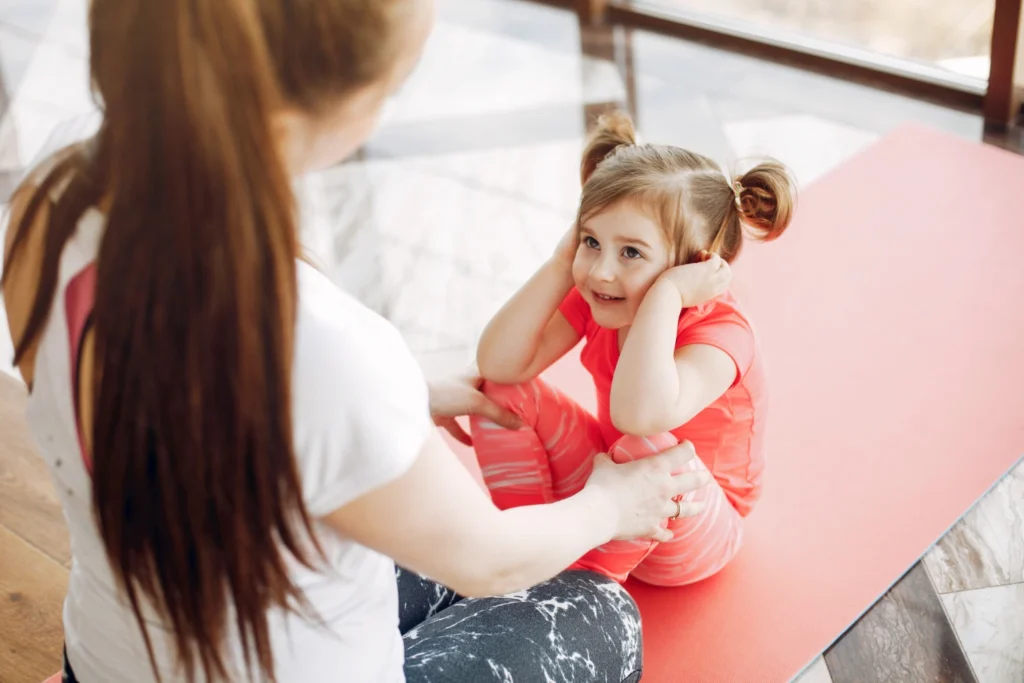
Integrating these principles into daily life can reinforce the work we do in our sessions. Here are some ways families in Edmonton can incorporate movement and music at home:
- Sing Everyday Routines: Create simple songs for getting dressed, brushing teeth, or cleaning up. The repetition within a melodic context helps embed vocabulary and sequence.
- Action Songs are Key: Engage with classics like “The Itsy Bitsy Spider,” “Head, Shoulders, Knees, and Toes,” or “I’m a Little Teapot.” These songs combine specific actions with words, reinforcing meaning and motor planning.
- Explore Edmonton’s Music Scene: Attend family-friendly music events at the Winspear Centre or local libraries. Simply exposing your child to live music in a joyful setting builds positive associations with sound.
- Create a Movement Break Basket: Fill a basket with items for quick movement breaks: a scarf to wave to music, a small trampoline, or a tunnel to crawl through. Use these breaks to reset before a communication-rich activity like reading a book.
- March to the Beat: While walking to a local park in Edmonton, march or clap to a beat. You can then use that same beat to practice saying your child’s name or a target word like “go” or “more.”
A Collaborative Approach at Mosaic Speech Therapy
At Mosaic Speech Therapy, our approach is rooted in evidence-based practice — not myths. We know that music and movement don’t “fix” speech sounds, but they do create a rich foundation for language growth, social interaction, and confidence.
If you are seeking a dynamic, child-led approach to speech therapy in Edmonton, we invite you to contact Mosaic Speech Therapy. Let us help you discover the symphony of movement and music that will unlock your child’s potential for connection and communication.
For personalized assistance, feel free to contact us at info@mosaic-slp.ca or 587-292-0072.