
Edmonton is one of Canada’s most linguistically diverse cities, and many families here raise their children in two—or even three—languages. If you’re one of those families, you’ve likely heard conflicting advice: “Speaking two languages will confuse your child.” “Bilingualism causes speech delays.” “Just focus on English.”
These myths are not just unhelpful—they’re wrong. And for many families, following this advice means giving up something irreplaceable: the language of your culture, your grandparents, your identity.
This post is for every Edmonton parent raising a bilingual child and wondering whether their child’s speech or language development is on track—and what to do if it isn’t.
The Truth About Bilingualism and Language Development
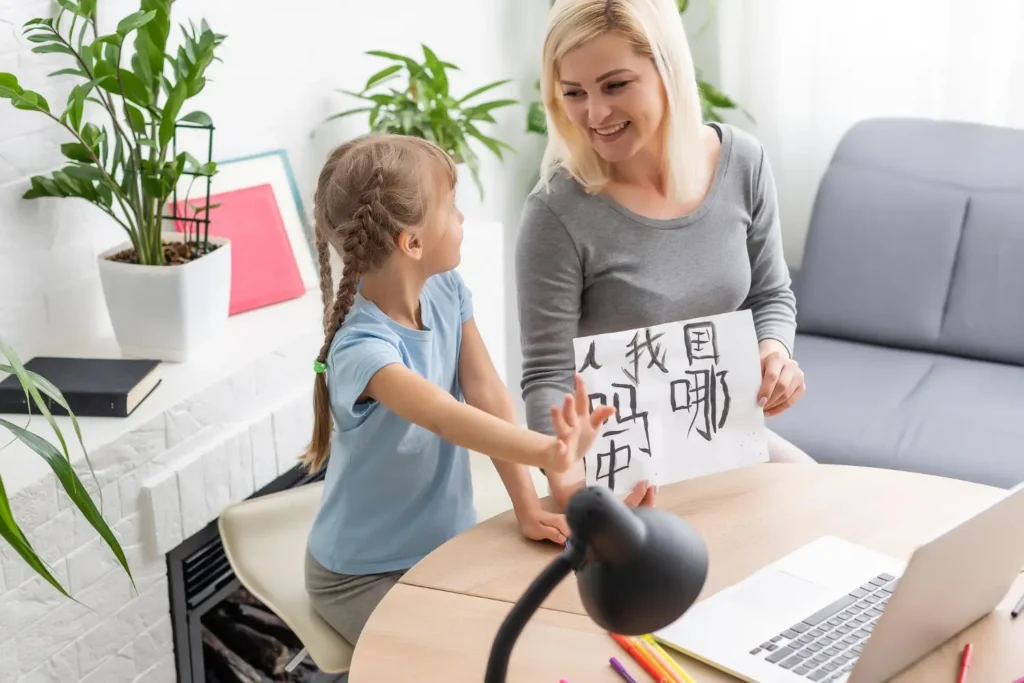
Let’s address the myths head-on. Decades of research in speech-language pathology confirm that bilingualism does not cause language delays or disorders. Raising a child with two languages is one of the most cognitively enriching things you can do—it builds stronger working memory, executive function, and social awareness.
What is true is that bilingual children:
- May mix languages in a single sentence (called “code-switching”)—this is completely normal and a sign of linguistic sophistication, not confusion
- May have smaller vocabulary in each individual language than monolingual peers, but their total vocabulary across both languages is comparable
- May reach certain expressive milestones slightly later because they are learning a more complex linguistic system
- Should still follow the same trajectory of communication development in terms of gestures, social engagement, understanding, and overall expressive growth
If a bilingual child has a language disorder, the disorder will appear in both languages—not just in the weaker one. This is an important diagnostic insight.
Common Bilingual Language Patterns That Are Normal (Not Worrying)
Understanding what’s typical in bilingual development helps parents distinguish between normal variation and a genuine concern.
Code-switching (“Can I have some agua?”) is not a sign of confusion—it’s a sophisticated linguistic strategy. Bilingual adults do it too.
Language dominance shifts over time. A child raised speaking Tagalog at home may become English-dominant once they enter school. This is typical, especially in English-majority environments like Edmonton.
Silent periods in the second language are normal, especially when a child first enters an English-language daycare or school. Some children stop speaking their home language at school for weeks or months while they absorb the new language—this is called a receptive phase.
Vocabulary gaps in one language (knowing a word in Punjabi but not in English, or vice versa) are entirely normal. Bilingual children learn words in the context where they use them most.
When to Be Concerned: Signs That Warrant Assessment
While bilingualism itself is not a risk factor for language delays, some signs in a bilingual child should prompt a professional evaluation:
- Significantly fewer words across both languages combined than expected for age
- Difficulty understanding simple instructions in either language
- Limited social engagement, pointing, or joint attention in any language
- Not combining words by 24–30 months in any language
- Regression—losing words or skills they previously had
- Frustration or withdrawal when trying to communicate
At Mosaic Speech Therapy, we assess bilingual children respectfully and comprehensively, taking into account both languages, family background, and cultural context. We never recommend giving up a home language—and we never treat bilingualism as the problem.
Practical Strategies for Supporting Both Languages at Home
Whether or not your child has a delay, these strategies help bilingual children thrive linguistically:
One parent, one language (OPOL). One of the most researched approaches: each parent consistently speaks their own language to the child. This creates clear, consistent input in both languages without mixing.
Protect minority language time. In Edmonton, English will dominate school, media, and peer interactions. Intentionally create protected time and space for the home language—mealtimes, bedtime stories, calls with grandparents, cultural community events.
Don’t sacrifice richness for simplicity. Speak naturally and richly in your home language. A child who hears simple, limited language in their heritage tongue will develop limited language in that tongue. Use stories, humor, poetry, and complex sentences.
Read in both languages. Even if your child can’t yet read, reading bilingual books or the same story in two languages builds vocabulary and narrative comprehension across both.Never shame code-switching. Respond to the content of what your child says, not the language they said it in. Let them code-switch freely at home.

How Mosaic Speech Therapy Supports Bilingual Families in Edmonton
Our team at Mosaic Speech Therapy understands that language is not just communication—it’s identity, belonging, and family. We are committed to culturally responsive, evidence-based care for Edmonton’s diverse families.
For bilingual children, our assessments include:
- Collection of language samples in both languages where possible
- Parent report measures that assess skills across both languages
- Careful interpretation that accounts for bilingual developmental norms—not monolingual benchmarks
- Therapy plans that incorporate and support both languages
We also offer parent coaching to help families embed strong bilingual strategies into daily routines, and teletherapy for families across Alberta who may not be able to access in-person services. If you’re raising a bilingual child and have questions about their speech and language development, we’d love to talk.
Contact us at info@mosaic-slp.ca or call 587-292-0072. Your child’s whole linguistic world deserves to be supported—not just half of it.