
Watching your little one take their first steps into the world of communication is one of parenting’s most exciting journeys. How to stimulate language development in kids is a question many parents ask, especially when they want to give their children the best start possible.
Whether you’re concerned about your child’s progress or simply want to support their natural development, understanding effective language stimulation techniques can make a significant difference in your child’s communication skills.
Creating a Language-Rich Environment

The foundation of language development in children starts with creating an environment filled with meaningful conversations and interactions. Your home should be a place where language flows naturally throughout daily activities.
Talk Throughout the Day
Narrate your activities as you go about your day. When changing diapers, describe what you’re doing: “Now I’m putting on your clean diaper. Let’s put your legs through here.” This constant stream of language gives children numerous opportunities to hear words in context.
Respond to All Communication Attempts
Whether your child is babbling, pointing, or making gestures, respond as if they’re having a real conversation with you. This back-and-forth interaction teaches them that communication is a two-way process and encourages them to keep trying.
Use Simple, Clear Language
Speak in short, simple sentences that are slightly above your child’s current level. If they’re saying single words, use two-word phrases. If they’re using two words, expand to three or four words.
Daily Activities That Boost Language Skills
Mealtime Conversations
Meals provide excellent opportunities for language development. Name foods, describe tastes and textures, and talk about what you’re eating. “This apple is crunchy and sweet” or “The soup is hot, let’s blow on it” gives children descriptive vocabulary.
Bath Time Learning
Bath time is naturally engaging and provides countless opportunities for language. Describe actions like “splash,” “pour,” and “wash.” Talk about body parts, water temperature, and the bubbles. The relaxed atmosphere makes it easier for children to absorb new words.
Grocery Shopping Adventures
Turn grocery shopping into a language lesson. Name items as you put them in the cart, describe colors and shapes, and talk about what you’ll cook with different ingredients. This real-world application helps children connect words with objects and concepts.
Reading and Storytelling Techniques
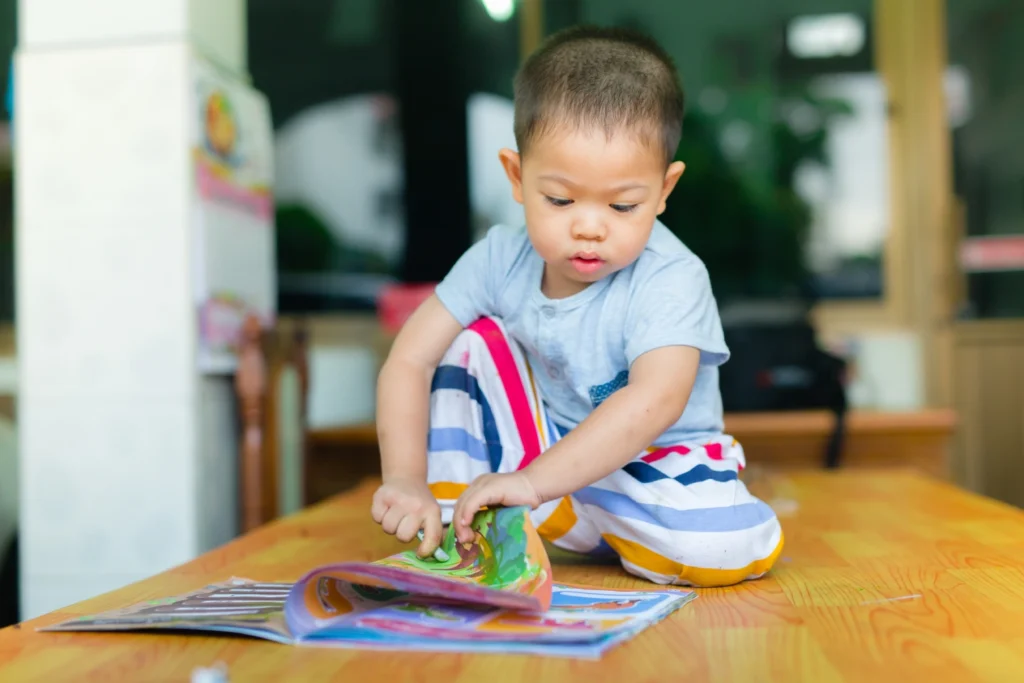
Choose Age-Appropriate Books
- 6-12 months: Touch-and-feel books with textures
- 12-18 months: Books with familiar objects and simple words
- 18+ months: Story books with repetitive text and rhymes
Make Reading Interactive
Don’t just read the words on the page. Ask questions like “Where’s the dog?” or “What sound does the cow make?” Point to pictures and let your child turn pages. This interaction keeps them engaged and reinforces learning.
Create Your Own Stories
Make up simple stories about your child’s day or favorite toys. This personalization makes the experience more meaningful and shows children that stories can be about anything, encouraging their own storytelling attempts.
Music and Movement for Language Growth
Music naturally supports language development through rhythm, repetition, and melody. Songs help children remember words and phrases while making learning enjoyable.
Singing Benefits
- Improves memory and recall
- Teaches rhythm and patterns in language
- Builds vocabulary through lyrics
- Encourages participation and interaction
Simple Songs to Try
Traditional nursery rhymes, finger plays, and action songs work wonderfully. “Twinkle, Twinkle, Little Star,” “The Itsy Bitsy Spider,” and “If You’re Happy and You Know It” are classics that support language development while being fun to sing together.
Common Concerns and Red Flags
While children develop at different rates, certain signs might indicate the need for additional support. If your child isn’t meeting basic milestones or seems to be regressing in their language skills, it’s worth discussing with your pediatrician.
Signs to Watch For:
- No babbling by 12 months
- No words by 15 months
- Difficulty following simple instructions
- Limited vocabulary growth
- Frequent frustration when trying to communicate
When to Seek Professional Help?

Sometimes, despite your best efforts, children need additional support. Mosaic Speech Therapy offers specialized services for children experiencing language delays or difficulties. Early intervention can make a tremendous difference in outcomes.
Benefits of Professional Support
Professional speech therapists can assess your child’s specific needs and create targeted strategies. They work with families to implement techniques at home and provide ongoing support throughout the development process.
Supporting Language Development is a Partnership
Parents and caregivers are a child’s first and most influential language models. By incorporating intentional communication strategies into your daily life, you can create a language-rich environment that nurtures your child’s development.
At Mosaic Speech Therapy, we are honored to partner with families across Edmonton to guide, support, and celebrate every step of your child’s communication journey. For personalized assistance, feel free to contact us at info@mosaic-slp.ca or 587-292-0072.