If you’re noticing your young child having difficulty communicating, it’s natural to feel worried or unsure about the next steps. Many families wonder whether traditional, sit-down therapy approaches will truly work for their toddler or preschooler. At Mosaic Speech Therapy, we take a different approach—one built on joy, curiosity, and meaningful interaction.
We specialize in play-based speech therapy, a child-led method that turns everyday fun into powerful opportunities for communication growth.
What Is Play-Based Speech Therapy?
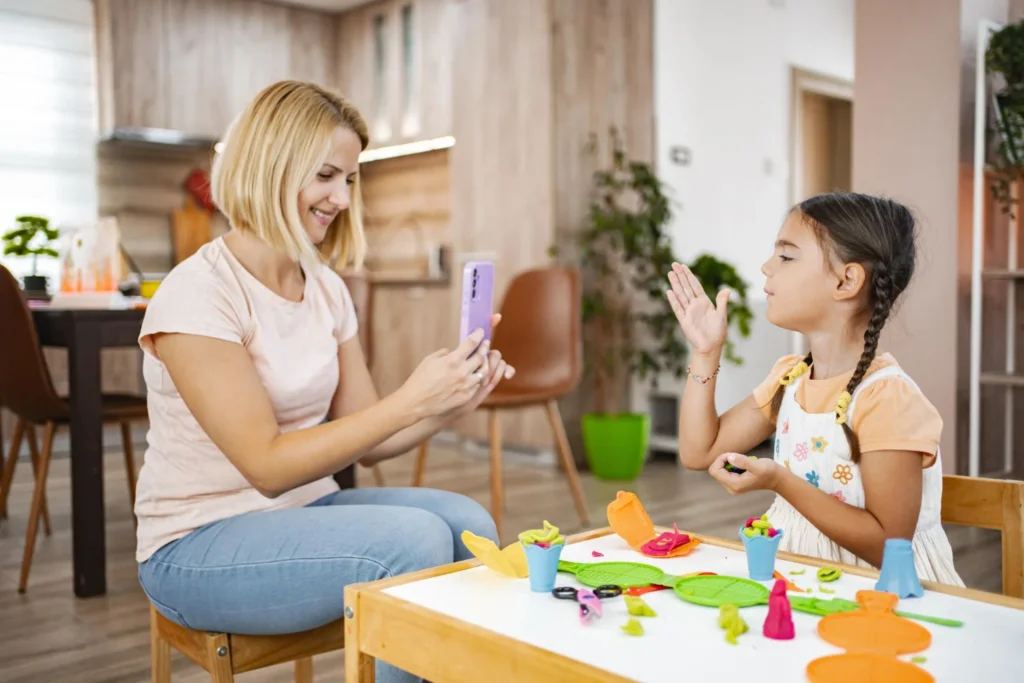
Play-based speech therapy is an evidence-supported approach where therapists weave language-learning opportunities into natural, child-led play. Instead of structured drills at a table, sessions are flexible, interactive, and guided by what genuinely interests your child.
Therapists create engaging environments and use intentional techniques to model words, expand communication attempts, and support skill development—all while your child plays.
This approach works because play is a child’s primary way of learning. Through play, they explore how things work, experiment, solve problems, and interact with others. When children are engaged in something they enjoy, their stress levels drop, their motivation increases, and their brains are ready for learning.
Our Core Principles at Mosaic Speech Therapy
Every session at Mosaic Speech Therapy is guided by a set of foundational principles to ensure therapy is effective, enjoyable, and meaningful.
1. Child-Led Engagement
We don’t force activities. Instead, we follow your child’s interests—whether that’s cars, dolls, sensory bins, or bubbles. Their natural curiosity becomes the engine that drives progress.
2. The Natural Environment Is the Classroom
Communication opportunities are built into real, functional activities. Rather than holding up flashcards, we play with real toys and real-life scenarios. Your child may roll cars down a ramp, pretend to cook, or splash during a toy bath—all opportunities for meaningful communication.
3. Focus on Communication Intent
Our goal is bigger than just getting your child to say a word. We want them to want to communicate. We create moments where communication becomes necessary—reaching, pointing, requesting, protesting, or showing excitement.
4. The Therapist as a Play Partner
Our SLPs join your child in play, modeling language at just the right level. Through techniques like self-talk, parallel talk, and strategic pausing, we create rich opportunities for your child to respond, imitate, or initiate communication.
What a Play-Based Session Looks Like at Our Edmonton Clinic
A typical play-based session is full of movement, excitement, and purpose. You’ll often see the therapist on the floor, following your child’s lead and turning their play choices into communication practice.
1. Observation and Connection
We start by watching what your child gravitates toward. This helps us understand their interests and select play routines that will motivate them.
2. Joining Their Play
Therapists join in gently without taking over. They might mirror actions, describe what your child is doing, or begin a related play activity nearby.
3. Creating “Communication Temptations”
We set up playful situations that encourage your child to communicate. For example:
- Putting a favourite toy in a sealed container so they need help to open it
- Holding onto a missing puzzle piece and waiting for a request
- Pausing during a fun routine (like blowing bubbles) to encourage “more”
- “Forgetting” an important item to spark communication
4. Modeling and Expanding Language
We model words, sounds, and short phrases throughout the session.
If your child points to a ball, we might say, “Ball! Big red ball!”
If they say “car,” we may expand with, “Fast blue car! Vroom!”
5. Tracking Progress—Through Play
Although each session looks like pure fun, therapists are always observing and noting your child’s communication attempts, strengths, and next steps. This helps us tailor future sessions and measure progress.
Benefits of Play-Based Speech Therapy for Edmonton Children
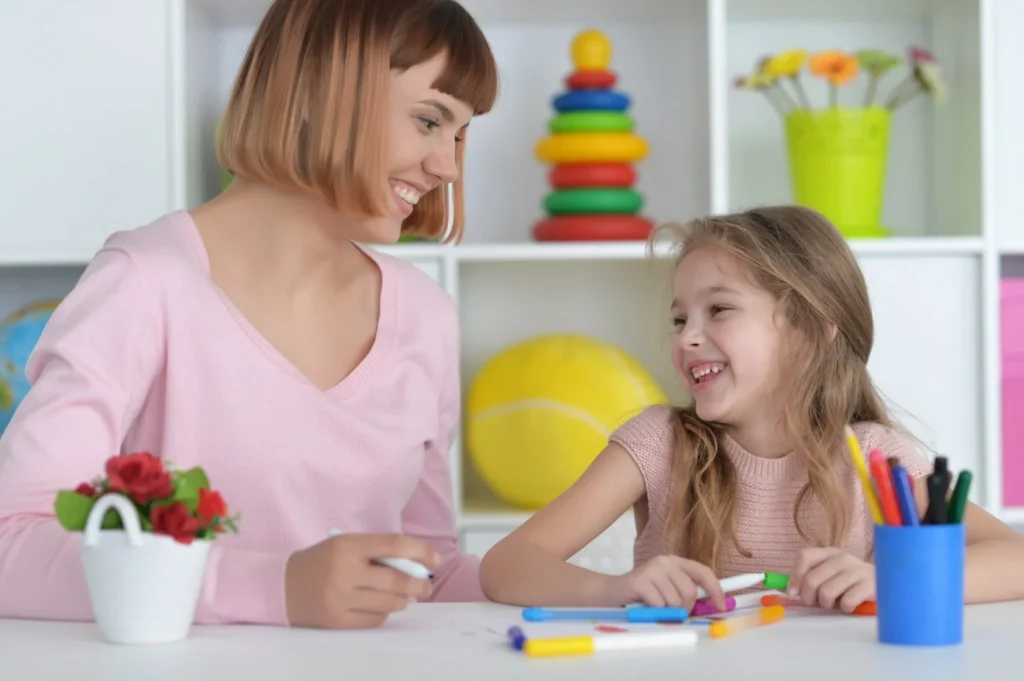
Families across Edmonton—from Mill Woods to Riverbend to Oliver—have seen meaningful progress through this approach. Some key benefits include:
1. High Motivation and Low Anxiety
When therapy feels like play, children feel comfortable, confident, and willing to try new things.
2. Better Real-World Carryover
Because skills are learned in real-life play situations, children naturally use them at home, daycare, and the playground.
3. Whole-Child Development
Beyond speech and language, play-based therapy supports:
- Turn-taking
- Joint attention
- Social interaction
- Problem-solving
- Cognitive development
4. Empowerment and Confidence
Children learn that their communication—verbal or nonverbal—has power. This builds self-esteem and encourages them to keep trying.
Is Play-Based Speech Therapy Right for Your Child?
This approach is highly effective for toddlers and preschoolers and supports children with a wide range of communication needs, including:
- Speech and Language delays
- Autism Spectrum Disorder (ASD)
- Social communication difficulties
- Childhood Apraxia of Speech (CAS)
- Fluency disorders
- And other speech and language challenges
At Mosaic Speech Therapy, we’re committed to helping Edmonton families find a therapy approach that feels supportive, engaging, and effective.
If you’re ready to see how play-based speech therapy can help your child build meaningful communication skills, we’d love to connect with you. For personalized assistance, feel free to contact us at info@mosaic-slp.ca or 587-292-0072.