Most parents who call us for the first time have the same mix of feelings: relieved to finally be taking action, but also nervous about what the assessment will actually involve. Will it be intimidating for their child? Will it feel like a test? Will the results be hard to hear?
We get it. Walking into a clinical setting with a two-year-old or a five-year-old who doesn’t know what’s about to happen takes a certain amount of trust. So we want to walk you through exactly what to expect, because it’s almost always gentler and more relaxed than parents anticipate.
Before You Even Come In
When you book an assessment at Mosaic Speech Therapy, you’ll receive some intake paperwork to complete ahead of time. This usually includes questions about your child’s developmental history — things like pregnancy and birth history, any medical concerns, how they’re doing at daycare or school, and your specific concerns about their communication.
Don’t stress about getting every answer perfect. We’re not looking for a medical report — we’re looking for your perspective as the parent who knows your child best. The information you share shapes how the SLP approaches the session.
What the Session Looks Like
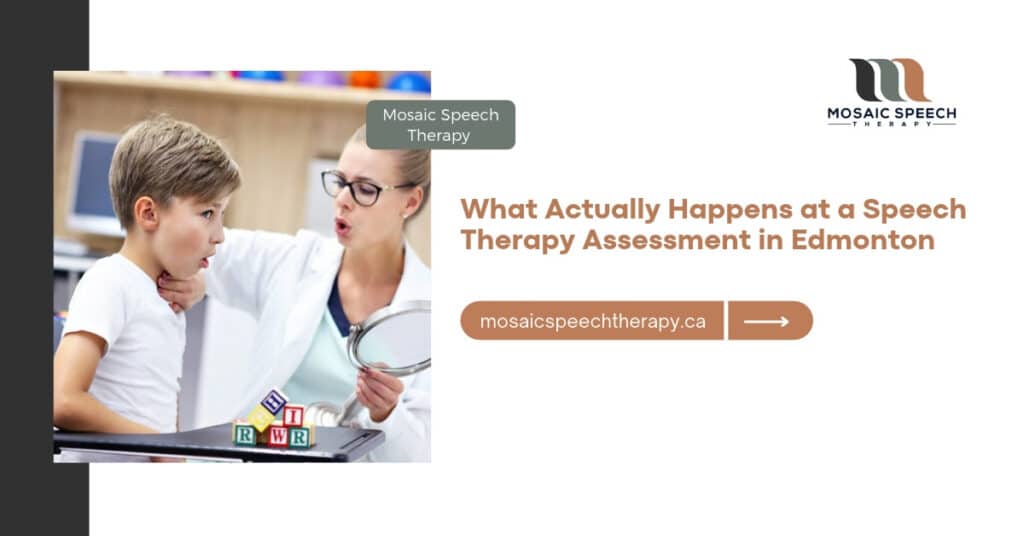
Assessment sessions are child-led and, for young children especially, almost entirely play-based. Your child will sit in a room with toys, books, and activities while the SLP plays with them and observes how they communicate.
The SLP is watching for a lot of things during what looks like casual play: how your child uses language, the sounds they produce, how they interact, whether they follow instructions, how they respond to questions. They may also use some standardized assessment tools — structured tasks that allow them to compare your child’s skills to other children of the same age — but these are typically woven into the session rather than presented as a formal test.
For most young children, it doesn’t feel like anything clinical at all. They’re just playing. The SLP does most of the real work quietly in the background.
You’re welcome to stay in the room during the session, and for young or anxious children, a parent’s presence is often helpful. The SLP will guide you on when to step in and when to let your child engage independently.
How Long Does It Take?
Assessment sessions at Mosaic Speech Therapy typically run between 60 and 90 minutes depending on your child’s age and the nature of the concerns. There’s also time at the end for the SLP to talk with you about initial impressions, explain what they observed, and answer your questions.
A written report is usually provided within a few weeks of the assessment. This report outlines findings, any diagnosis or area of concern identified, and specific recommendations—including whether therapy is recommended and what that would look like.
What If the Results Are Hard to Hear?
We believe in being honest with families, and sometimes that means sharing results that are difficult to receive. If your child has a significant delay or a condition that needs ongoing support, we’ll tell you clearly—but we’ll also explain what that means in practical terms, what the path forward looks like, and what you can do right now to help.
A diagnosis or area of concern identified at an assessment is not a ceiling for your child. It’s a starting point for getting them the right support. Most families leave their assessment feeling more informed and less anxious than when they arrived—not because we minimize concerns, but because having a name for what’s happening and a plan for what to do next is almost always less scary than not knowing.

What to Bring and How to Prepare Your Child
Bring any previous assessment reports, hearing test results, or school reports that might be relevant. If your child has a comfort object or a favorite toy, bring that too.
As for preparing your child—keep it simple. Let them know they’re going to a place to play with someone new, and that you’ll be there with them. Don’t over-explain or build it up too much. A casual, matter-of-fact approach usually works best.
Mosaic Speech Therapy is located at 205, 7609-109 Street NW in Edmonton’s United Health Centre, with free street parking and easy transit access. We offer direct billing to most insurance providers. Reach us at info@mosaic-slp.ca or book online at mosaicspeechtherapy.ca—we’d love to meet your family.